Impact of Human Intrusion in Habitat Destruction (HIHD) and Strategic Management Plans for Restoration of Forest Eco System
Keny J Newport 1 and Jeyanth K Newport* 2
1 Field Assistant, Salim Ali Centre for Ornithology and Natural History (SACON),
Anaikatti, Coimbatore, India
2 Research Associate, Crescent Educational Society, Nagercoil, Kanyakumari
District, Tamil Nadu, India
*Corresponding Author: Jeyanth K Newport- jeyanthnewport@gmail.com
Abstract
Wildlife conservation in India has a long history, dating back to the colonial period when it was rather very restrictive to only targeted species and that too in a defined geographical area. Then, the formation of the Wildlife Board at the national level and enactment of Wildlife Act in 1972 laid the foundation of present day “wildlife conservation” era in post-independent India. Henceforth, the Act has been amended several times and the National Wildlife Advisory Board has undergone various changes. In the last few decades, Human Wildlife Conflict (HWC) is considered as the major problem, as it has been projected that animals are destroying the crops of the farmers adjacent to peripheral areas of reserve forests. This has resulted in killing of wild animals to restore the crops by the farmers. HWC is the result of the cause and focus is being given on management plans to tackle HWC. But the crux of the problem is Human Intrusion in Habitat Destruction (HIHD), which is the root cause of the HWC. This paper is analyzing the problem of HIHD and highlights case studies of wild animals inhibiting villages and in adopting management plans and proper policies to restore the natural wildlife habitats thereby minimizing the HWCs. The management plans of HIHD should be at policy level and should be implemented at various levels to restore the natural wildlife habitat to sustain the forest eco system.

- Abbreviations
- HWC: Human Wildlife Conflict;
- HIHD: Human Intrusion in Habitat Destruction;
- EIA: Environmental Impact Analysis;
- LFA: Log Frame Analysis;
- MPCs: Migratory Path Corridors;
- TATR: Tadoba-Andhari Tiger Reserve
- FRZ : Forset Reserve Zone
Introduction
Human Intrusion in Habitat Destruction (HIHD) is a major threat for many of the endangered species in the different forest ranges within India. Many cases of conflict have been reported in recent years, but the root cause of the problem is not being addressed. In India, history reveals that tribals inhabited in the core region of dense forests before Independence and they balanced their life with the nature. Their traditional knowledge and respect to nature was in perfect harmony [1] as the forest was well preserved by the tribals and there was balance between the forest dwellers and the wild life. Also, the forest dwellers depended on collection of Minor Forest Produces for their livelihoods and also practiced eco-friendly farming practices that did not affect the forest eco system. Also, the forest dwellers served as vanguards for protecting the wild animals from the poachers. They balanced harmony with the nature and served as vanguards in protecting the forest eco system. If so, what is the meaning of Human Intrusion in Habitat Destruction (HIHD)? Why and where does it occur? As India is being considered as a Developing Nation, after Independence, many developmental projects are implemented without considering proper Environmental Impact Assessment (EIA) or planning with the local forest dwellers. Lack of knowledge among the planners and the related mechanisms are the major reasons for the habitat destruction that has resulted in HWC. The end result is the killing of animals, birds and insects that has created imbalance in the various eco system [2]. Further the displacement of forest dwellers for development projects has brought conflict among the forest dwellers and the wild life in the forest eco system. Also destruction of trees for development projects, destruction of forest habitat and human made blockades of wildlife migratory tracks has disturbed the forest eco system that results in frequent human wild life conflicts.
Study Methods
The Primary source of information was collected from the forest dwellers and forest field officers. Discussion was the methodology adopted to collect data’s at field level. The secondary source of information was collected from archives and journals. Field visits were made to document photos for evidences.
Factors which are the causes for HIHD
Implementation of new National highways and railways resulted in wildlife habitat destruction in many sanctuaries and reserve forests. Regular hit and run of wild life is being reported in daily news [3]. In 2018 it has been recorded that 161 animals were killed on roads and railway lines published by Down To Earth and (June 13, 2019) 83 leopards alone were killed in accidents reported by Wildlife Protection Society of India (A God in Distress Report, 1997), the highest kill of leopards in accidents in the past decade. Off the record, the numbers may go up to few thousands if we consider the wild animals, birds and reptiles.
Free-flowing rivers are the freshwater equivalent of wilderness areas. They’re home to a diverse array of species and provide food and water for animals and people. Construction of major dams along the course of rivers has resulted in migration of animals from their accustomed habitat due to the destruction of forest habitat [4]. Dams store water, provide renewable energy and prevent floods. Unfortunately, they also worsen the impact of climate change. They release greenhouse gases, destroy carbon sinks in wetlands and oceans, deprive ecosystems of nutrients, destroy habitats, increase sea levels, waste water and displace poor communities.
Times of India reports that, Hydroelectric projects in India’s Eastern Himalayas, risk damaging this world biodiversity hot spot, which is home to many endangered species (February 2021). For example, estimates suggest that there are currently fewer than 300 freshwater South Asian river dolphins (Platanista gangetica gangetica) in the Brahmaputra River and its tributaries.
Of the 170 or so dams that are planned or under construction there, some will change the river’s morphology and hydrology, de- grading or destroying the deep pools that form the dolphins’ natural habitat and further endangering these rare mammals. A survey conducted by Vikramshila Biodiversity Research and Education Centre (VBREC) in partnership with researchers from Ashoka Trust for Research on Ecology and Environment (ATREE), Bangalore and Wild Life Institute of India (WII) Dehradun found that the number of dolphins in the sanctuary had declined to 154 from 207 in 2015 (Down To Earth July 19, 2018). The dams’ cumulative impact on downstream wetland and floodplain ecosystems also threatens species extinction and spread of diseases in Kaziranga National Park in Assam, which hosts the world’s highest density of endangered Bengal tigers (Panthera tigris tigris) and a major population of Indian rhinoceroses (Rhinoceros unicornis).
Mining operations and the process of constructing new mining infrastructure often results in large-scale alteration of the environment at landscape and ecosystem levels. The clearing of vegetation is one of the most significant impacts of mining on biodiversity [5]. Extensive mining operations have historically destroyed large areas of vegetation. Loss of vegetation cover occurs not only in the mined area but also in areas affected by associated activities such as dumping of overburden soil wastes, deposition of tailings, development of infrastructure for transport and service corridors (railway lines, roads, pipelines, conveyers) and surface facilities (offices, workshops, vehicle parks, storage depots and warehouses). The excavation of the substrate materials and creation of the mine voids also alter the soil profile, hydrology, topography, and nutrient status of the substrate. In June 2020, the state of Maharashtra said that the Bander coal block was too close to the northern edge of the Tadoba-Andhari Tiger Reserve (TATR) which with its core and buffer areas is home to 115 tigers and 151 leopards (Economic Times, June 25, 2020).
Forest fires are a major cause of degradation of forests environment. Despite lack of reliable information about forest fire, it is clear that the acreage of forest area burnt today is much more than ever before, all over the world. In 2011, a study was conducted on the butterfly population in the plains of Himalayas, and it was found that the butterfly populations were wiped out in the wake of two consecutive forest fires in a reserve forest in Uttarakhand (Forest Fire Disaster Management, 2014). Other than butterflies, the effect of the fire was equally devastating on other insects, shrubs, bushes, birds and mammals. Given that there were over 20,000 reported forest fires in India during the summer of 2016, it is obvious that fires are the biggest threat to Indian biodiversity [6].
Flood waters of the river Brahmaputra are the key to the ecology of Kaziranga National Park which is the home of the great one horned rhinoceros. Annual flooding re-vitalizes the famed grass lands, which shelter keystone species such as rhinos, gaur and elephants. In 2019 Hog deer faced the biggest casualties due to flash floods. Most of them either get drowned by flood water. In the list of ‘drowned’ animals there were 11 rhinos and one elephant when official reports last came in (India Today, July 14, 2019). Between 13 and 19 July, park authorities have recorded a total of 141 animal deaths in 2019. Actual numbers may be much more according to some experts, as it is not humanly possible to document mortality of each animal. This list also does not include a plethora of smaller mammals and reptiles [7].
Diseases and infections that are naturally transmitted between animals and humans are known as zoonoses and have been known to affect human health throughout history [8]. Such diseases have an important impact on public health and economy, and on the conservation of wildlife. Exposure of humans to zoonoses occurs in different ways, from well-known or well-understood direct transmission routes, such as bites and rabies, to less obvious path ways. The risk factors or potential exposure routes of which are difficult to recognize and are interlinked in a relationship network between human beings, animals, and the environment through air borne, water borne and land borne.
Psittacosis is an uncommon infectious disease that is most often transmitted to humans through exposure to infected birds, especially parrots, cockatiels, parakeets and similar pet birds. Psittacosis can affect the lungs and may cause inflammatory illness of the lungs (pneumonia), which is similar to the present COVID-19 virus. The most frequent sources of zoonose transmission comprise food and contaminated water, vector insect bites and scratches, or bites from infected animals. Zoonotic diseases account for approximately 75% of emerging infectious diseases [9]. Also, some of these pathogens may cause serious diseases in wild animals but, in some cases, the animals act as reservoirs, without showing any clinical symptoms [10].
As mentioned above, zoonoses can be transmitted by direct contact with infected animals, dead or alive, which are used by humans in several ways, including consumption as food or as pets. The consumption of animal products as food or in traditional medicine, for example, facilitates the transmission of serious and wide spread zoonoses, such as tuberculosis or rabies. Another example deserving mention is avian influenza (Influenza A) viruses; these are responsible for highly contagious acute illness in humans, pigs, horses, marine mammals, and birds, occasionally resulting in devastating epidemics and pandemics. The spread of recent COVID 19 virus is from influence of bats on human beings due to HIHD. There are many theories that the corona virus has spread from Pangolins or bats from China and yet there are no evidences of research about the spread to human beings.
It is not a miss to mention that recent trends in construction of tourist resorts and religious centers within the buffer region of forest are disturbing the migratory tract of wild animals and the wild life habitat. Despite restriction on use of forestland for non-forest purposes, many temples and religious institutions have come up inside forests tracts used by elephants for moving from one habitat to another.
Wildlife tourism can also disrupt nesting and feeding sites of many insects, birds and small animals. Animals may be driven off their reserves or forced to find new areas to hunt because of an increase in human traffic, negatively affecting not only the animal but the entire ecosystem in the area.
Due to human intrusion in wild habitat, discarded food and other pollutants like polythene and waste materials adversely affect the local wildlife habitat. Hence it is obvious that construction of temples, tourist resorts and religious centers by Human Intrusion of Habitat Destruction disturbs the wildlife migratory movements and also pollution of tourism is inimical to the wildlife. Habitat destruction, fragmentation, and modification caused by human led activities (i.e., industrial and residential development, logging, crop farming, livestock grazing, mining, road and dam building, and pesticide use) have taken an extreme toll on threatened and endangered wildlife populations at an alarming rate. Also in recent years, some of the biggest threats to wildlife include illegal wildlife trade, habitat destruction, invasive species, pollution, and clime change. Healthy ecosystems depend on plant and animal species as their foundations. When a species becomes endangered, it is a sign that the ecosystem is slowly falling apart. Each species that is lost triggers the loss of other species within its ecosystem. Humans depend on healthy ecosystems to purify our environment.
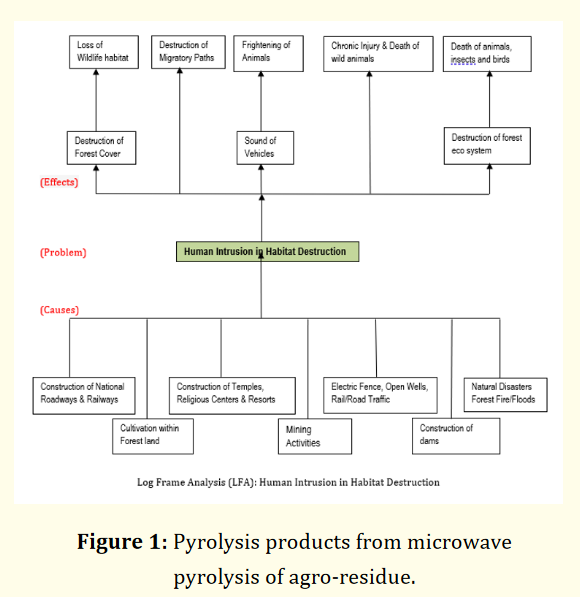
HIHD cause and effect
The factors that are the reasons for the problem of Human Intrusion in Habitat Destruction (HIHD) and its effect on Human Wildlife Conflict (HWC) are given below.
Effects of human intrusion in habitat destruction (HIHD) – Case Studies
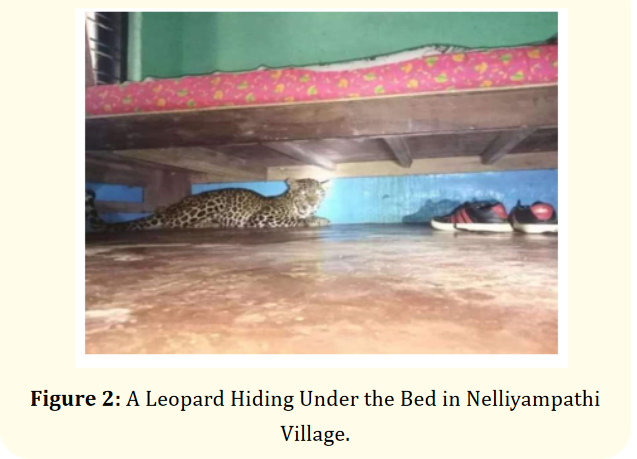
Nelliyampathy is a hill station located in Palakkad district, Kerala. It is well known for its tea garden, coffee cardamom, and
orange plantations. A beauty spot of Western Ghats, this place is also blessed with lush dense rain forests with wild animals like elephant, bison, deer, Lion-tailed macaque, leopard, and much more flora and. The village is having approximate population 5255 and the people depend on cash crop cultivation for their livelihoods. 70% of the population is daily laborers working in the farms. The contact of humans with wildlife is frequent and recently a leopard was found sleeping under the bed of a family. People of the villagers did not provoke or disturb the leopard as it was informed to the forest officials and they drove the wild animal back to the forest.
Coonoor is a hill station in the southern Indian state of Tamil Nadu. It’s known for its tea estates in the surrounding Nilgiri hills. If falls in the Western Ghats and surrounded by thick forests. It is estimated 400 hectares of land has been cultivated with tea plantations and it is almost 21.78% of the total district area. It is not a miss to mention that regular face to face contact of humans with wild animals. As there is habitat loss due to cultivation of tea in forest areas, the animals frequently visit tea plantations for their food and water. Daily laborers working in the tea plantations will face the danger of wild animals, but due to awareness among the workers, they will not disturb the animals and also the wild animals are adjusted to the situation to cope up by not hurting them.
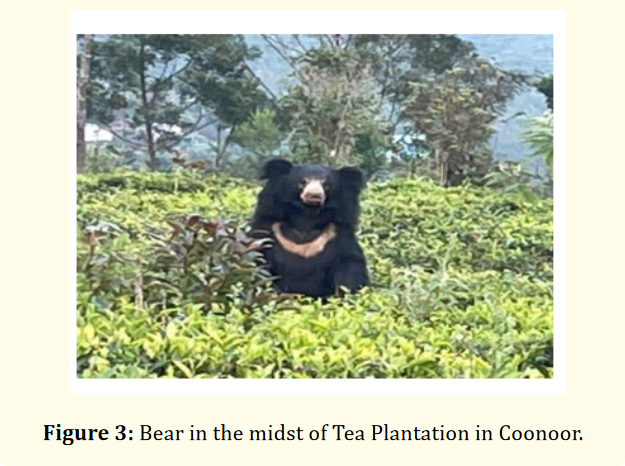
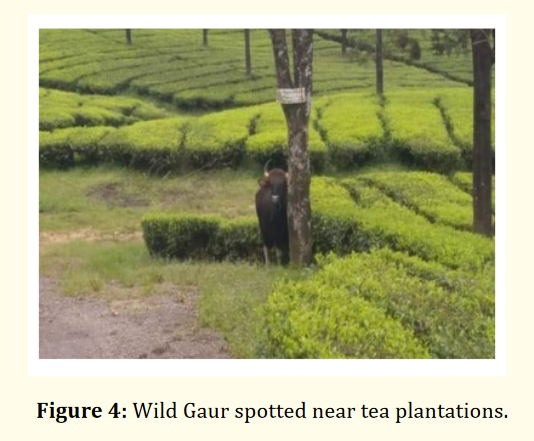
The Nilgiri Sub-Cluster is a part of the Western Ghats, which was declared a World Heritage Site by UNESCO in 2012. It is the largest protected forest area in India, spreading across Tamil Nadu, Karnataka and Kerala. The Nilgiri Biosphere Reserve was the first biosphere reserve in India established in the year 1986. It is located in the Western Ghats and includes 2 of the 10 bio-geographical provinces of India. Wide ranges of ecosystems and species diversity are found in this region. Thus, it was a natural choice for the premier biosphere reserve of the country. The Nilgiri. BiospherReserve is very rich in plant diversity. About 3,300 species of flowering plants can be seen here. Of the 3,300 species 132 are endemic to the Nilgiri Biosphere Reserve. The genus Baeolepis is exclusively endemic to the Nilgiris. Some of the plants entirely restricted to the Nilgiri Biosphere Reserve include species of Adenoon, Calacanthus, Baeolepis, Frerea, Jarodina, Wagatea, Poeciloneuron, etc.
The fauna of the Nilgiri Biosphere Reserve includes over 100 species of mammals, 350 species of birds, 80 species of reptiles and amphibians, 300 species of butterflies and innumerable invertebrates. 39 species of fish, 31 amphibians and 60 species of reptiles endemic to the Western Ghats also occur in the Nilgiri Biosphere Reserve. Fresh water fish such as Danio neilgheriensis, Hypselobar busdubuis and Puntius bovanicus are restricted to the Nilgiri Biosphere Reserve. The Nilgiri tahr, Nilgiri langur, slender loris, blackbuck, tiger, gaur, Indian elephant and marten are some of the animals found here. According to 2011 census a total of 7.25 lakh people are living in Nilgris district. The occurrence of wild animals near villages is common scenario and the conflict between human and wild life in very minimum.
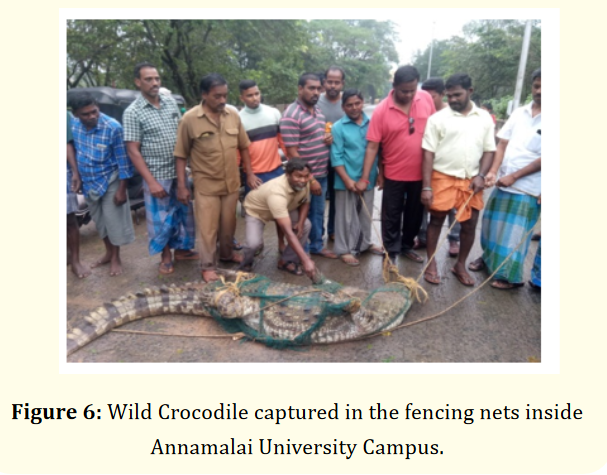
Pichavaram is a village near Chidambaram in Cuddalore District, Tamil Nadu, India. It is located between the Vellar estuary in the north and Coleroon estuary in the south. The Vellar Coleroon estuarine complex forms the Killai backwater and the mangroves that are permanently rooted in a few feet of water. Pichavaram consists of a number of islands interspersing a vast expanse of water covered with mangrove forest. The Pichavaram mangrove Forest is one of the largest mangrove forests in India covering about 1100 hectare of area. It is separated from the Bay of Ben- gal by a sand bar. The biotope consists of species like Avicennia and Rhizophora. It also supports the existence of rare varieties of economically important shell and fin fishes. The mangroves also attract migrant and local birds including snipes, cormorants, egrets, storks, herons, spoonbills and pelicans. About 177 species of birds belonging to 15 orders and 41 families have been recorded. High population of birds could be seen from November to January due to high availability of prey, coincidence of the time of arrival of true migrants from foreign countries and local migrants from their breeding grounds across India. The availability of different habitat types such as channels, creeks, gullies, mudflats and sand flats and adjacent seashore offers ideal habitat for different species of birds and animals. Recently a crocodile was found caught in house fencing net and it was caught by Forest People and left in the deep cauvery river basin.
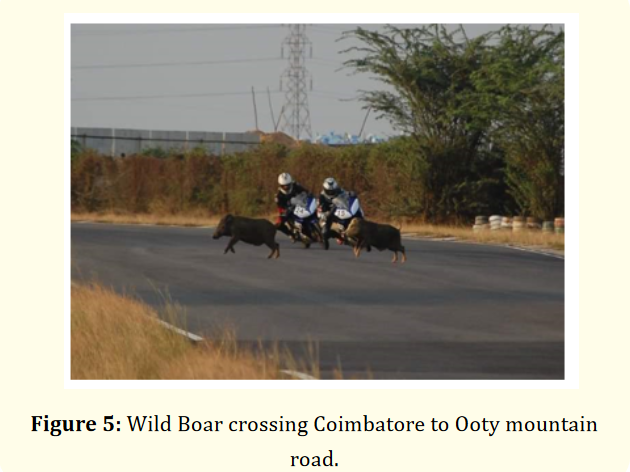
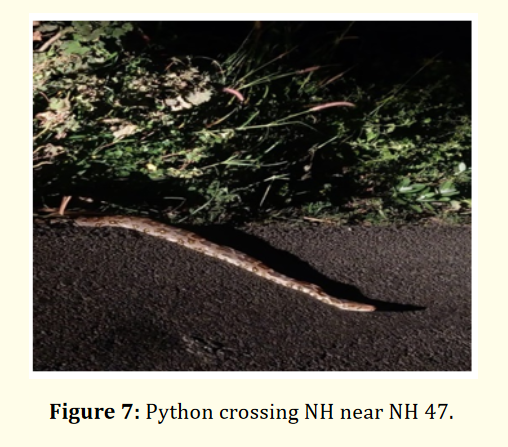
Nagercoil is the headquarters of Kanyakumari District. The district is surrounded by seas on three sides and mountain on one side as the Western Ghats starts from here only. The nearest mountain is Chunkankadai which has fox, pangolin, porcupine, python, variety of birds and insects. Near the foot hills there is a road connecting Trivandrum NH to Tirunelveli NH. Heavy vehicles will be going this road and hence this narrow road has busy traffic. In night time, we can find big pythons crossing the road and even though mountain is close to town, the people are aware of not to disturb
the wild animals crossing the road.
Behavioral changes among conflicts
Earlier it was reported frequent conflicts between humans and wildlife due to intrusion. The Forest Department has initiated Friends of Forests program to educate the villagers to protect wild life habitat thereby reducing the conflicts. The friends of forests program selected youth from the same village who served as protectors and educators of the villagers. Many NGOs were involved in implementing various awareness programs to make villagers aware of nature and in habitat protection. Also school children were given regular awareness program for creating awareness among the protection of wild animals. The awareness education by Forest Department and NGOs has changed the attitude of people towards wildlife. In 1995, the Forest Department along with World Bank support initiated the protection of forest eco system by involving the NGOs in education of forest dwellers in Nallamala Forest Eco System in Andhra Pradesh. The impact of the project was a success as 68 tigers are found in the reserve as per 2020 census as the forest dwellers protects the tiger habitat from poachers and also there is no human wildlife conflict in poisoning of tigers. In the conservation project, the Forest Department gave skill development trainings and alternate livelihoods to protect the forest eco system.
The education paved way for protecting natural habitats and also bridging the gap of conflicts. The above mentioned case studies are very few examples that people are serving as protectors of forest and wild animals. There is a drastic change in the perception of people as the wild animals eventhough they enter human habitations in search of water or food, it was not disturbed whereas inform forest people to send the animals back to their habitat safe. The attitudinal change is due to the awareness education of the people and the attitude to care for the wildlife and forest eco system.
The effort of Forest Department is also noteworthy as their attitude is to protect people from wild life attack by reducing the conflicts as they provide compensation, if their cash crops are destroyed by wild animals. Also Government provides compensation, if life is lost by wild life attack, whereas the loss of life is huge, but the incidents are minimized due to education/awareness program by forest department. Due to friendly approach by the forest department, the people take the pride to protect the wildlife rather than disturbing the wildlife if they enter human settlements. Also many development projects are implemented by the Forest Department with the help of International funding agencies, by providing trainings and alternate livelihoods thereby reducing the pressure on the forest eco system.
Conclusion and Recommendations
Considering the problems of Human Intrusion in habitat destruction, there should be strong policies and proper Environment Impact Assessment to sustain forest eco system, thereby protecting the wildlife. The recommendations are:
- Before implementing development projects like roads or railway lines, the State Government should prepare a proper Environmental Impact Assessment (EIA) report by considering the problems of removal of soil and disturbing the migratory paths of wild animals.
- Removal of soil and debris will be the major problem if not properly removed. During rain, these debris will be washed away and will silt the nearby rivers and ponds. Also removal of soil and rocks will weaken the grip of land and will result in land slide. Hence along with EIA, the Government should get report from Geological Department regarding the soil strength.
- To tackle the problem of blocking migratory path of animals, the Government Should get proper mapping from Forest Department through GIS and creation of sub way under the tracks for making the movement of wild animals safe called Migratory Path Corridors (MPCs).
- The agency that gets the tender for laying roads or railway lines should give a blue print of removal of soil and silt safely and also plans to provide safe paths for wildlife migration before approval of the project.
- The Government should implement policy not to give permission for mining activities inside core and buffer area as this will affect soil and moisture conservation, disturbances to wildlife due to human interventions and habitat destruction.
- Regarding dams, it is more on to EIA report prepared by State Government involving Departments like Hydrology, Geology and Public Works Department for technical aspects, Forest Department in assessing impact on wildlife and sociology Department in dealing with forest dwellers.
- It is difficult to combat forest fire. The forest dwellers are not the reason for forest fire as they know how to safe guard forest. So it is necessary to educate people who are going inside the forest for trekking and other purposes by Forest Department. Before giving permission they should be given strict guidelines of Do’s and Don’t. Also the areas that are frequently affected by forest fires can be demarcated and dried trees in that area can be given by auction under strict conditions, so that the area will be protected from spread of forest fire and the Government will also generate revenue. Considering the topography, the Government can make artificial trenching to make distance at particular intervals; so that if there is forest fire at least it will be confined to particular area and this will protect wildlife.
- Every year the rainfall is on the decreasing trend. In olden days, we had more rainfall and we do not have floods in forests. So it is a manmade disaster for wildlife. The State Government should set up proper Department by involving professionals to desilt ponds and to maintain canals and rivulets to store rainwater and to provide proper run off of water on regular intervals.
- Construction of religious centers within the periphery should be banned. Coastal Regulatory Zone (CRZ) is applicable for Coastal lands as no construction is allowed upto 500 meters from high tide level. The Government should implement policy of Forest Reserve Zone and there should not be any new construction or existing constructions to be removed 1 km away from peripheral zone of the forest. These constructions are blocking the migratory paths of wild animals and hence Government should implement FRZ to protect wildlife. Also human problems due to tourism and waste management will be controlled.
- For wildlife tourism, the Forest Department can choose selected safe zones and can implement safe safari that will also generate profit for Forest Department.
- Regarding transmission of deadly virus, the Government should impose certification of immunization from Vet doctors to avoid risks. Transmission by avian species to domestic animals is hard to handle, but if any cases are reported, the Government should take proper steps to make the particular place a contained zone to prevent further spread. If it is transmitted through humans like the Corona, the only possible way of containment is by sealing the airports and seaports.
Biliography
- Prakash Tripati. “Tribes and Forest: A critical appraisal of the
tribal forest right in India”. Research Journal of Social Science
and Management 6 (2016): 1-8. - Upma M., et al. “Human Wildlife Conflict in India: A review of
economic implication of loss and preventive measures”. Indian
Forester 142.10 (2016): 928-940. - S Fellows., et al. “Impact of existing National and State High-
ways on Wild Animals of Pench and Satpura Tiger Reserve”.
Entomology, Ornithology and Herpetology 4 (2015): 1-3. - Gehlot HS. “Impact of Mining on Faunal Diversity of Guda Bish-
nonian Area, Jodhpur District of Rajasthan (India)”. National
Journal of Life Sciences 13.1 (2016): 59-61. - Edward RG and Maharaj KP. “Threats from India’s Himalaya
Dams”. Ecology 03 (2016): 36-37. - Shijo J., et al. “Forest Fire in India, a review of the knowledge
base”. Journal for Forest Research 14 (2009): 127-134. - Abhik G. “Flood and Flood Plain Management in North East In-
dia: An Ecological Perspective”. APHW 1 (2003): 231-236. - Krusse H., et al. “Wildlife as source of Zoonotic Infections”.
Emerging Infectious Diseases 12.10 (2004): 2067-2072. - Chomel BB., et al. “Wildlife, Exotic Pets and Emerging Zoono-
ses”. Emerging Infectious Diseases 13.1 (2007): 6-11. - Williams B., et al. “Analysis and Management of Animal”. Jour-
nal of Wildlife Management 67.3 (2002): 817.
- publication with
Website: www.actascientific.com/